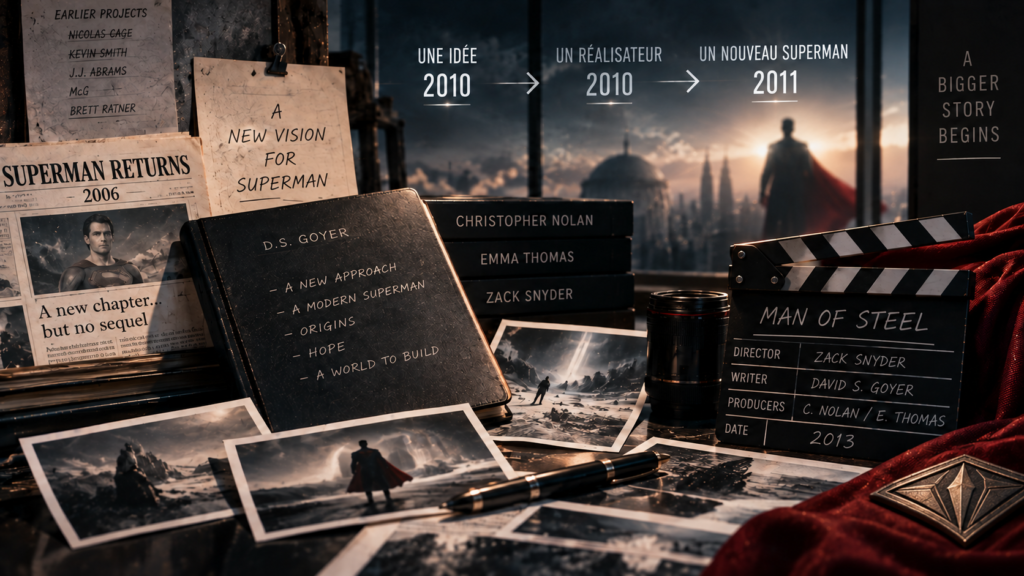

On June 14, 2013, Man of Steel opened in U.S. theaters.
The film had a clear immediate purpose: relaunch Superman for a new era, with Henry Cavill as Clark Kent and Zack Snyder behind the camera.
At that point, Warner Bros. did not yet need to turn the story into a shared superhero universe. Previous article: Man of Steel: From the Start of Filming to the Creation of a New Superman.
Just over five weeks later, everything changed.
On July 20, 2013, at San Diego Comic-Con, Zack Snyder took the Hall H stage and revealed that his next film would bring Superman and Batman together on the big screen for the first time. In a matter of minutes, the future of Man of Steel became much larger than another Superman adventure. The world built around Clark Kent had opened up, and Batman was the first major character to enter it.
Just over five weeks after Superman, Warner expands the idea
Man of Steel had given Warner a new Superman and a new continuity. That did not automatically mean Batman belonged in it. Only a few years earlier, Christopher Nolan had described Batman and the new Superman as belonging to separate narrative worlds.
By July 2013, that was no longer the direction being taken. Henry Cavill’s Superman would meet a new Batman, created specifically for this continuity. Man of Steel was beginning to look less like the start of a Superman series and more like the foundation of something larger.
July 20, 2013: Zack Snyder announces Batman
Warner saved the reveal for the end of its Comic-Con presentation. Snyder confirmed that another Superman movie was being developed, then brought out Harry Lennix, who had played General Swanwick in Man of Steel.
Lennix read a passage associated with Frank Miller’s The Dark Knight Returns, the story in which an older Batman confronts Superman. The meaning quickly became clear: Superman and Batman were going to share a movie.
One distinction matters. The new project was not being announced as an adaptation of The Dark Knight Returns. The Frank Miller reference communicated the kind of tension that could exist between the two characters without making the film a direct adaptation of Miller’s story.
The movie did not even have its final title yet
In the summer of 2013, the project was not officially called Batman v Superman: Dawn of Justice. Reports referred to it as “Superman/Batman,” “Batman/Superman,” or simply the next Man of Steel movie.
Comic-Con therefore established a direction more than a finished blueprint. Superman would return. Batman would join him. Zack Snyder would direct. Much of the rest still had to be built.
What kind of Batman could follow Christian Bale?
Christopher Nolan had completed his Batman trilogy with The Dark Knight Rises in 2012. But Snyder’s Batman would not continue Christian Bale’s version. Warner wanted an entirely new incarnation of the character.
Man of Steel introduced a hero who was still discovering his place in the world. Batman, by contrast, could enter the story with years of history already behind him.
August 22, 2013: Ben Affleck becomes Batman
One month after Comic-Con, Warner ended the speculation. On August 22, 2013, the studio officially announced Ben Affleck as Bruce Wayne / Batman.
Warner said that Snyder and Affleck would create a new incarnation of Batman while continuing the universe established in Man of Steel. Henry Cavill was confirmed to return as Superman. The continuity fans would later call the Snyderverse was beginning to take a much more recognizable shape.
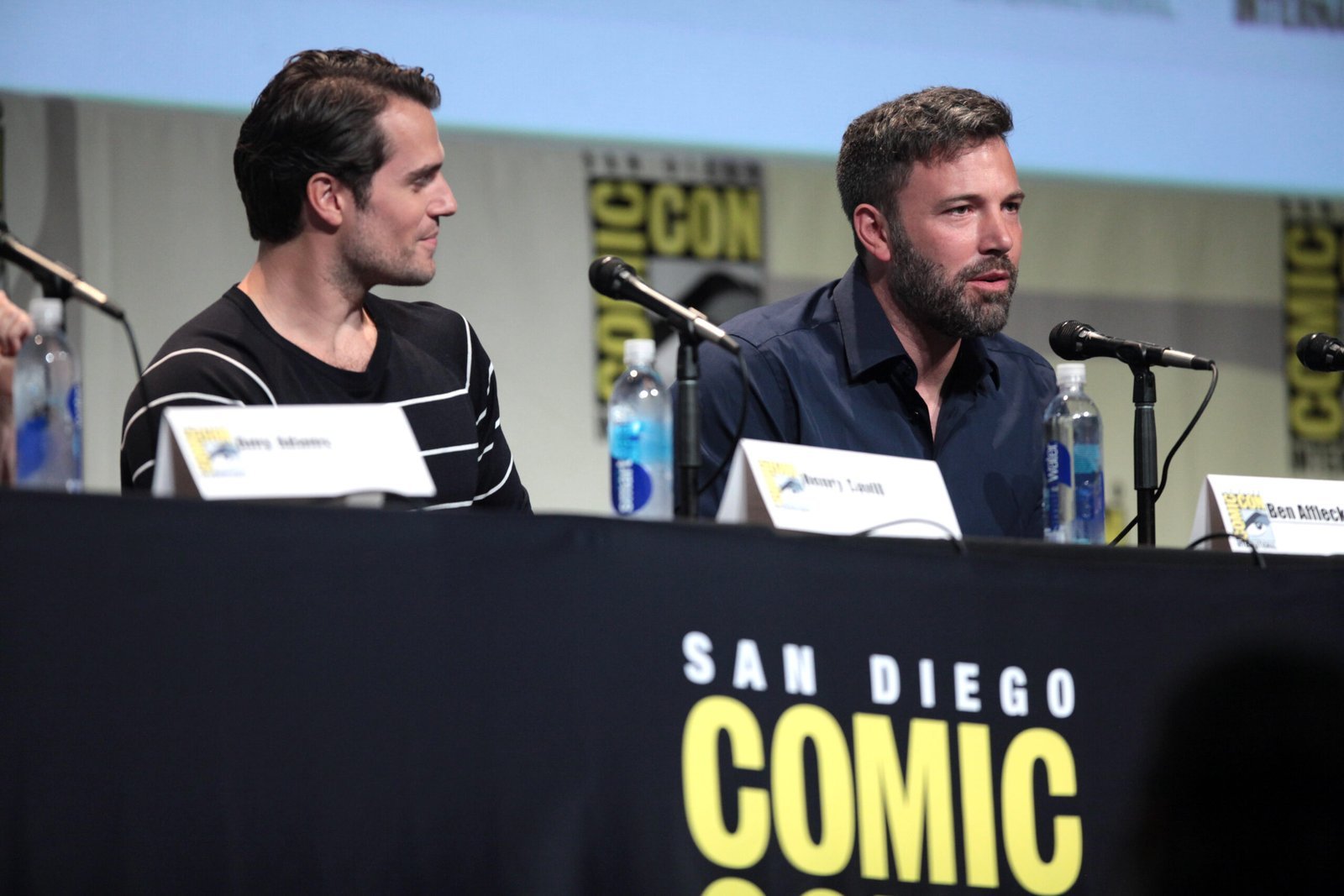
Ben Affleck’s casting triggers a huge reaction
The announcement immediately generated an enormous online response. For part of the audience, Affleck was far from an obvious choice to follow the period dominated by Christian Bale.
But Snyder was not trying to reproduce Nolan’s Batman. Superman was still near the beginning of his public existence, while Batman could be much further into his own career. Their confrontation could place two heroes at very different stages of their lives against one another.
Batman does not replace Superman
Batman’s arrival could easily be interpreted as Warner abandoning the idea of a true Man of Steel sequel almost immediately. The reality is more nuanced. Henry Cavill remained central to the new project.
Batman therefore became several things at once: a new character, a counterpoint to Superman, and a gateway into a much wider world. That final role would become increasingly important.
December 2013: Wonder Woman joins the project
On December 4, 2013, Warner announced another decision that significantly changed the nature of the movie: Gal Gadot would play Diana Prince / Wonder Woman.
Three of DC’s most famous characters were now expected to appear in the same film: Superman, Batman and Wonder Woman. The future cinematic DC Trinity was beginning to take shape.

The movie gradually becomes a gateway to a shared universe
Only months earlier, the world of Man of Steel had revolved around one extraordinary revelation: the existence of Superman. Now Warner was adding Batman, then Wonder Woman, and the central question was changing.
It was no longer only about how the world reacted to Superman. The story now had to consider the possibility that Superman was not the only extraordinary figure already living in this world.
Chris Terrio joins the screenplay
Another important change came in December 2013. Chris Terrio, recently acclaimed for Argo, was brought in to work on a new version of the screenplay originally written by David S. Goyer.
It would be misleading to describe this transition as if Goyer’s work simply disappeared. His screenplay remained the foundation of the project, and Terrio then developed a new draft from that base.
January 2014: Lex Luthor and Alfred find their actors
On January 31, 2014, Warner announced two more major casting decisions: Jesse Eisenberg would play Lex Luthor and Jeremy Irons would play Alfred Pennyworth.
Lex belonged to Superman’s world. Alfred belonged to Batman’s. Bruce Wayne was no longer simply being inserted into a Superman story. His own mythology was beginning to take shape around him.
The cast keeps pointing toward something larger
In spring 2014, trade reporting also revealed that Ray Fisher had been cast as Victor Stone, the character who would later become Cyborg. His role was expected to be limited, but his presence was another sign of how the project was evolving.
May 21, 2014: the movie finally receives its title
Almost ten months after the Comic-Con announcement, Warner revealed the official title: Batman v Superman: Dawn of Justice.
On the same day, Warner confirmed that principal photography was underway in the Detroit area. The project first revealed through the meeting of two major DC heroes was now an active film production.
Detroit becomes the center of an expanding universe
Production would take place in and around Detroit, with additional locations planned elsewhere. The filmmakers now had to bring together the Superman world established in Man of Steel, a new Batman and Gotham, Wonder Woman, Lex Luthor and the first visible pieces of a much larger DC continuity.
In less than a year, the Man of Steel follow-up had become something else
In June 2013, Man of Steel had only just opened. In July, Batman was announced. In August, Ben Affleck was cast. In December, Wonder Woman joined the project and Chris Terrio began working on the screenplay. In January 2014, Lex Luthor and Alfred found their actors. By spring, Victor Stone had entered the casting reports. And in May, the movie finally had a name: Batman v Superman: Dawn of Justice.
A Superman follow-up had become a meeting point for several DC mythologies.
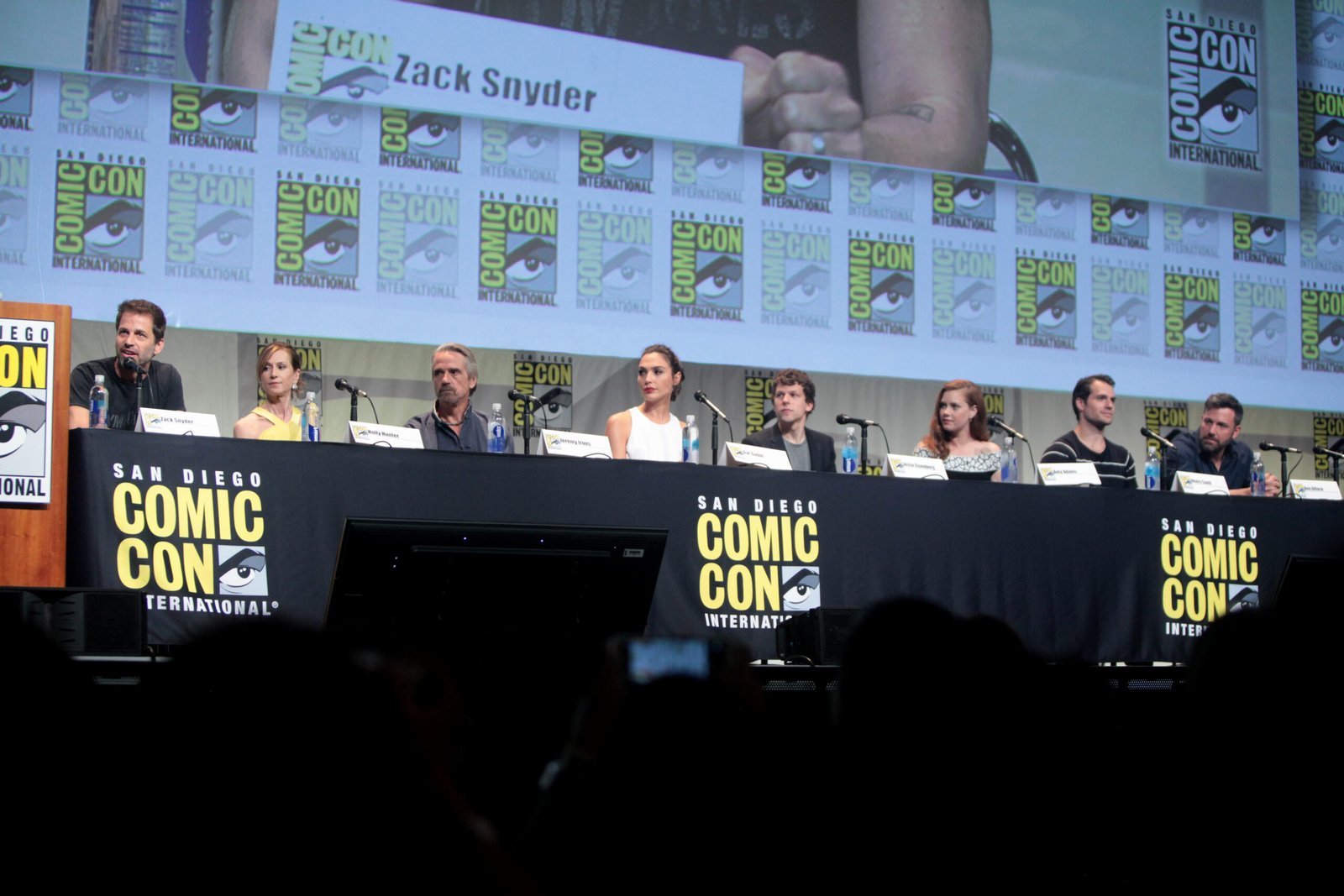
This is where the Snyderverse becomes much more concrete
When Man of Steel was first being developed, it would have been misleading to claim that a complete Snyderverse had already been mapped out. The situation was different by 2013 and 2014.
Warner was explicitly referring to the continuity established in Man of Steel. Batman entered it. Then Wonder Woman. Then Victor Stone. And the title Dawn of Justice appeared. Between summer 2013 and spring 2014, the continuity of Man of Steel was beginning to evolve into a shared DC cinematic universe.
“Snyderverse” was still not Warner’s official name for it. For the recommended viewing path through this continuity, see: What Order Should You Watch the Snyderverse Movies? A Spoiler-Free Guide.
Batman has entered the universe. Now he has to be built
By May 2014, the cameras were rolling. But announcing Batman was one thing. Building this Batman was another.
How old was he? How long had he been operating in Gotham? Why would he see Superman as a threat? What would his suit look like? His Batmobile? His Batcave? How could Gotham exist alongside Metropolis? And how could Wonder Woman enter the same story without feeling like a promotional cameo?
Those were now the questions the production had to answer. And they lead directly into the next chapter: Batman v Superman: How Zack Snyder Built Batman, Gotham and the DC Trinity.