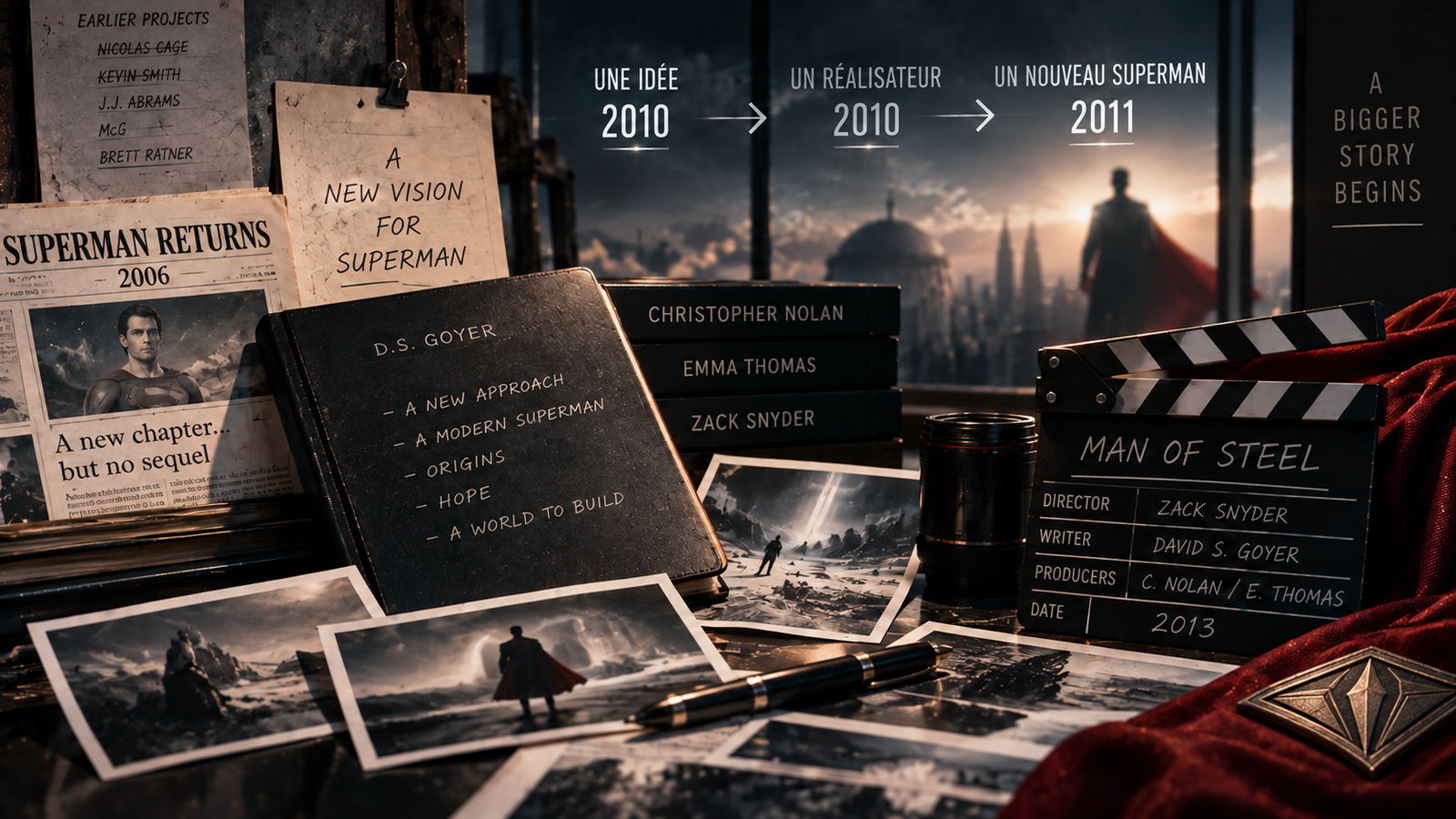
Today, it is easy to look at Man of Steel as the beginning of the Snyderverse.
Zack Snyder’s film introduced Henry Cavill as Superman. Three years later, that same continuity brought Batman and Wonder Woman together in Batman v Superman, eventually leading to the formation of the Justice League.
But that larger universe did not yet exist in its familiar form when the project first began.
Warner Bros. was not originally trying to launch something called the “Snyderverse.”
The immediate problem was much simpler:
how could Superman return to the big screen with a genuine fresh start?
To understand how Man of Steel began, we have to go back to a time before Zack Snyder, before Henry Cavill and before Warner knew exactly what this new Superman would become.
For the recommended viewing order, see our spoiler-free guide: What Order Should You Watch the Snyderverse Movies? A Spoiler-Free Guide.
After Superman Returns, Superman was once again without a clear cinematic future
In 2006, director Bryan Singer brought Superman back to theaters with Superman Returns.
Brandon Routh played Clark Kent in a movie deliberately connected to the cinematic world established by Richard Donner and Christopher Reeve.
The film was intended to put Superman back at the center of a major movie franchise.
That long-term franchise never materialized.
Despite significant worldwide box-office revenue, Superman Returns did not lead to the sustained sequel series Warner had hoped to establish.
And this was hardly the first difficult attempt to bring Superman back.
Before Superman Returns, Warner had already spent years developing and abandoning radically different versions of the character, with filmmakers, screenwriters and actors including Nicolas Cage, Kevin Smith, J.J. Abrams, McG and Brett Ratner becoming associated with various projects at different stages.
By the end of the 2000s, Superman occupied a strange position.
He remained one of the most recognizable fictional characters in the world.
Yet Warner Bros. still did not have a durable Superman film franchise.
Batman had shown that an iconic character could start over
At roughly the same time, another DC character was having a very different experience.
Christopher Nolan’s Batman Begins in 2005 and The Dark Knight in 2008 demonstrated that an extremely familiar superhero could be rebuilt for a new generation.
Those movies did not simply continue the previous Batman films.
They established their own continuity, rules and interpretation of the character.
David S. Goyer had played an important role in developing that new Batman alongside Nolan.
Looking back, it is tempting to assume that Warner’s next Superman was immediately intended to exist beside Nolan’s Batman.
It was not.
When the new Superman project began taking shape, Nolan publicly described Batman and Superman as characters operating within separate narrative worlds, each governed by its own internal logic.
Christian Bale’s Batman was not being prepared for a meeting with the new Superman.
Superman first needed to work on his own.
2009: Warner reorganizes the way it handles DC
An important corporate change did take place in September 2009.
Warner Bros. created DC Entertainment.
The new organization was designed to coordinate and develop DC characters more effectively across Warner’s film, television, video game, consumer-product and other businesses.
In hindsight, the decision is clearly significant to the broader history of DC on screen.
It showed that Warner wanted to make better use of DC’s enormous catalogue of characters and franchises.
But it is important not to read later events backward into 2009.
The creation of DC Entertainment is not evidence that a complete roadmap involving Superman, Batman, Wonder Woman, Darkseid and the Justice League already existed.
The Snyderverse, as fans would later understand it, had not yet been defined.
Zack Snyder had not even joined the Superman project.
The decisive idea came from David S. Goyer
The most direct origin of the future Man of Steel emerged while Christopher Nolan and David S. Goyer were still working on Batman.
The pair were developing the third movie that would eventually become The Dark Knight Rises.
During a period when they had reached an impasse on the Batman story, Goyer told Nolan about an idea he had for Superman.
Nolan immediately saw potential in the approach.
He and producer Emma Thomas helped bring the idea to Warner Bros., while Goyer began developing the screenplay.
This is probably the clearest point at which the creative history of Man of Steel truly begins:
David S. Goyer develops a new approach to Superman.
Christopher Nolan sees its potential.
The idea is taken to Warner Bros.
Zack Snyder is not involved yet.
And, just as importantly, the movie is not publicly being positioned as the opening chapter of a large shared superhero universe.
This Superman was supposed to stand on his own
The goal was not simply to apply The Dark Knight formula to Superman.
Nolan emphasized that each character required a different approach.
Batman worked according to one set of rules.
Superman required another.
The new movie would therefore establish its own world and begin again independently of Superman Returns.
That distinction matters.
Today, we know that the Superman introduced in Man of Steel would eventually meet Batman.
But in 2010, that Batman was not Christian Bale, and such a meeting was not yet the announced destination of the Superman project.
At this stage, the immediate objective remained straightforward:
make a successful new Superman movie.
A legal dispute also formed part of the background
There was another, less visible element surrounding Superman at the time.
Warner Bros. and DC had long been involved in complex legal proceedings concerning Superman and the heirs of co-creator Jerry Siegel.
In July 2009, one ruling stated that if production on a new Superman movie had not begun by 2011, the Siegel heirs could potentially pursue additional damages connected with the film arrangement.
That created another element of pressure around the timetable.
But it should not be exaggerated.
The ruling did not simply order Warner Bros. to make Man of Steel, and there is no solid basis for reducing the movie’s creation to a legal deadline.
Goyer’s creative pitch and Nolan’s involvement developed independently of that dispute.
The legal situation is best understood as part of the industrial and scheduling context, not as the sole reason the film existed.
Warner still needed a director
By 2010, the project had real momentum.
David S. Goyer was developing the screenplay.
Christopher Nolan and Emma Thomas were involved in guiding the project.
Warner wanted Superman back on the big screen.
But one central piece was still missing:
the director.
Several filmmakers were considered.
In October 2010, Warner ultimately chose Zack Snyder.
By then, Snyder was already known for visually distinctive movies including 300 and Watchmen.
His arrival was a major turning point.
But the chronology matters.
Snyder did not arrive at Warner with a fully formed Snyderverse already in his hands.
He joined an existing Superman project, developed around Goyer’s concept and with Nolan already involved.
What Snyder would then do was help turn that foundation into a cinematic world with a highly recognizable identity of its own.
Snyder begins shaping the world that will follow
Once Snyder became director, the project had to move beyond ideas and screenplay pages.
This new Superman needed a physical world.
Krypton.
Smallville.
Metropolis.
The Superman suit.
Kryptonian technology.
The photography.
The scale of the action.
The way Clark would be presented visually.
And perhaps most importantly, the way an ordinary world would react to the existence of someone like Superman.
Those decisions would gradually give Man of Steel its identity.
Several would also carry forward into later films.
This is where we can begin to see the visual and narrative language that would eventually become associated with the Snyderverse.
Not because an entire cinematic universe had already been mapped out.
But because one cinematic universe was now being built in detail.
Henry Cavill becomes the new Superman
At the beginning of 2011, Warner announced the decision that finally gave the project a face.
Henry Cavill would play Clark Kent and Superman.
The British actor was then best known to many viewers for The Tudors.
Superman was not entirely new territory for him either. Cavill had previously been considered for an earlier version of the character during Warner’s long search for a new Superman.
This time, however, the role was finally his.
It was a defining decision.
Warner no longer simply had another Superman project in development.
The studio now had its new Superman.
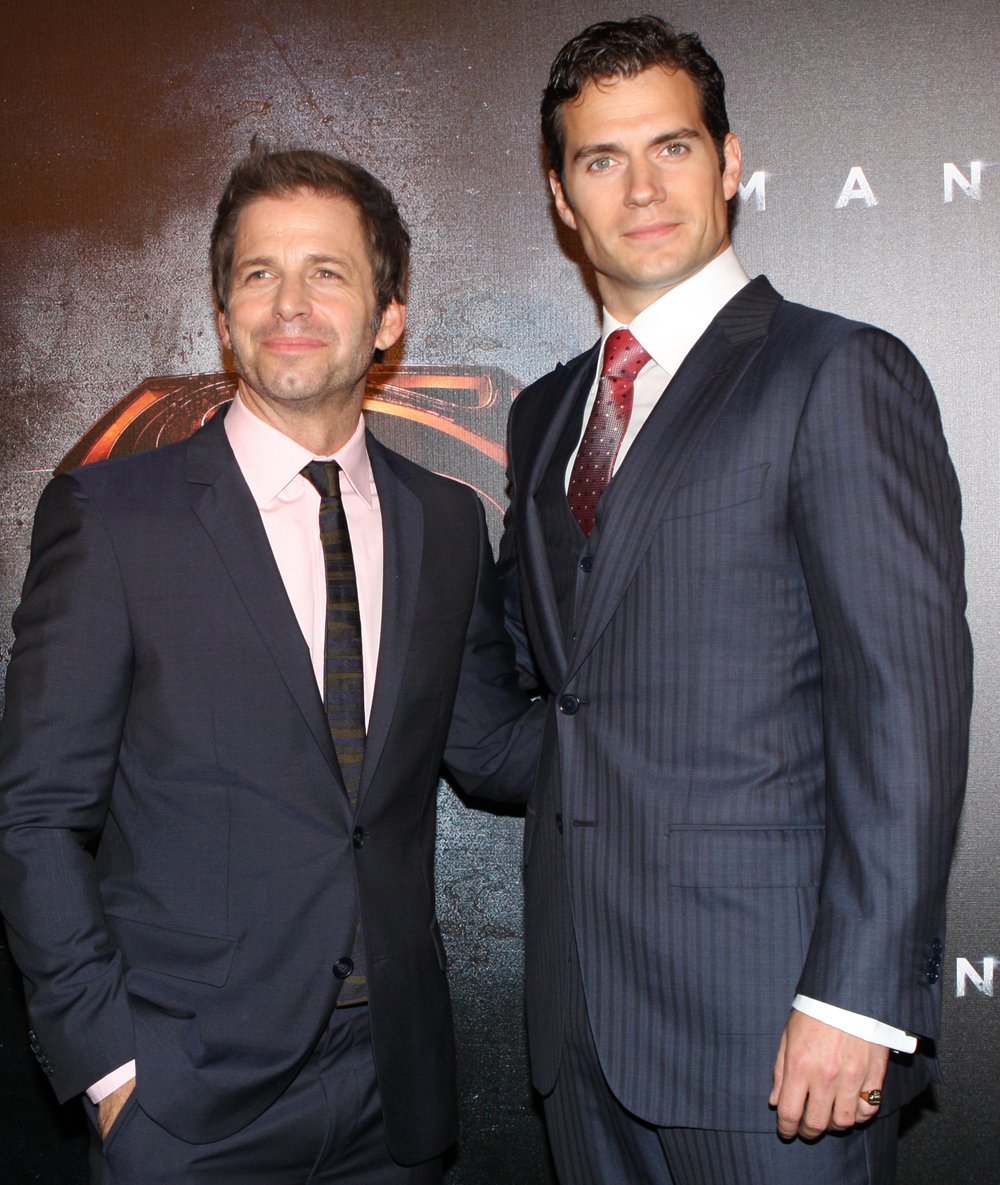

No one could yet know how far this version of the character would go, but Cavill would eventually become one of the central connecting figures across the films that followed.
Martha and Jonathan Kent establish Clark’s human identity
The rest of the cast began to take shape quickly.
Diane Lane was chosen to play Martha Kent.
Kevin Costner followed as Jonathan Kent.
Their presence revealed something important about this version of Clark.
The story would not only ask:
Where did Superman come from?
It would also ask:
Who raised him?
The contrast between Krypton and Kansas became fundamental to the character.
Clark had an extraterrestrial origin.
But his human identity and moral understanding had also been shaped by the Kent family.
That tension between two inheritances would become one of the central themes of Man of Steel.
Amy Adams becomes Lois Lane
Warner next announced Amy Adams as Lois Lane.
Lois had been part of Superman mythology since the character’s earliest history.
But this version also had to fit the more contemporary world being built around Clark.
She would not simply wait for Superman to appear.
She would investigate.
She would follow evidence.
She would actively try to understand the extraordinary events happening around her.
With Cavill, Lane, Costner and Adams in place, the human core of the movie was beginning to emerge.
Michael Shannon gives the Kryptonian threat a face
The choice of antagonist also revealed something about the direction of the film.
Michael Shannon was cast as General Zod.
That immediately connected the main conflict to Superman’s own origins.
Zod was not simply another powerful enemy.
He belonged to the world Clark had lost before he was old enough to know it.
The film could therefore place Superman between two identities:
Kal-El, son of Krypton;
and
Clark Kent, raised on Earth.
The birth of the hero and the violent return of his lost world could become part of the same story.
Jor-El completes Superman’s other family
By mid-2011, reports indicated that Russell Crowe was in advanced negotiations to play Jor-El.
He would ultimately join the final cast as Superman’s Kryptonian father.
That made the family structure at the heart of the story particularly clear.
On one side:
Jor-El and Krypton.
On the other:
Jonathan and Martha Kent and Earth.
Clark existed between them.
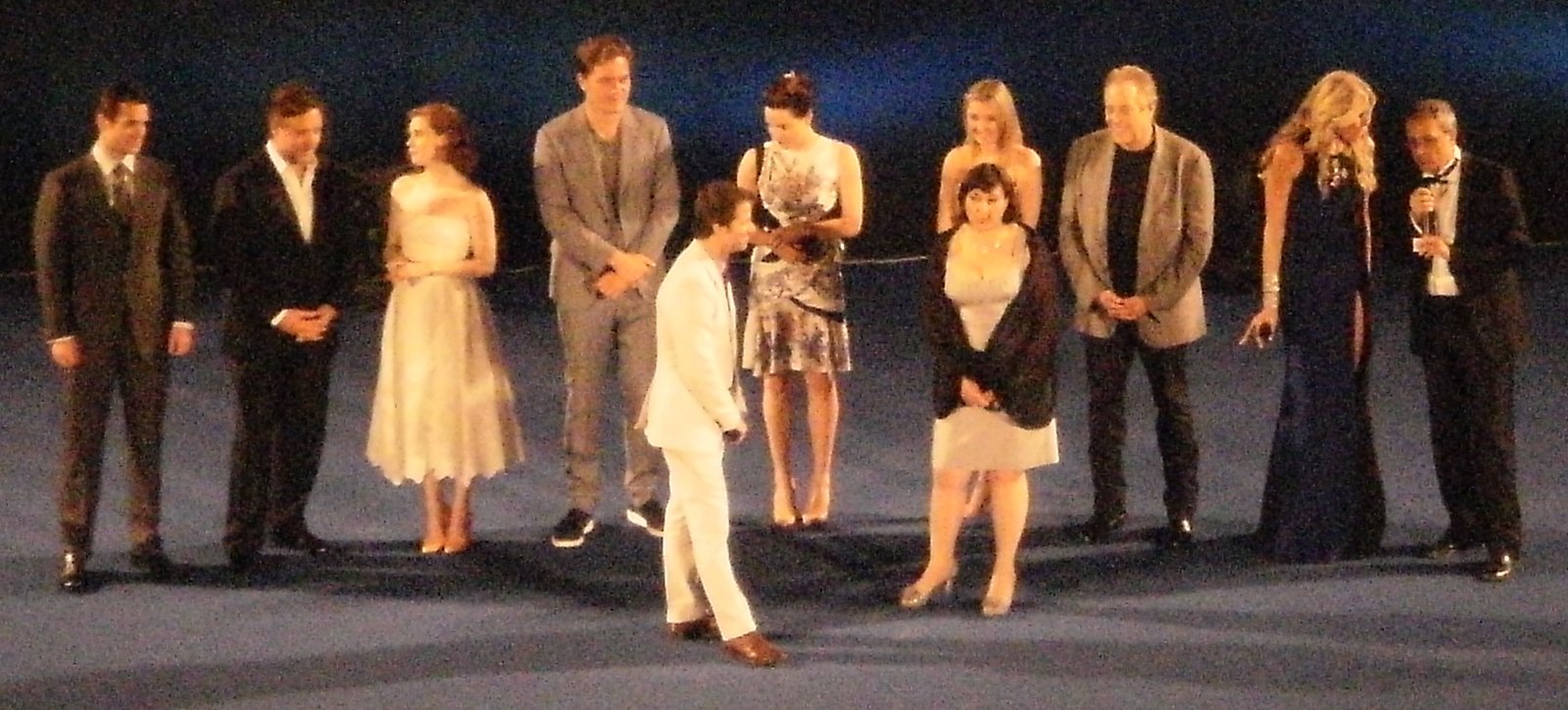
The growing cast would also include Amy Adams, Michael Shannon, Antje Traue, Laurence Fishburne, Ayelet Zurer, Christopher Meloni, Harry Lennix and others.
What had begun as a new approach to Superman was becoming a major film production.
.jpg)
So when was the Snyderverse actually born?
This is where hindsight can become misleading.
Today, we know what came after Man of Steel.
Batman entered the story.
Wonder Woman followed.
Aquaman, The Flash and Cyborg appeared.
Darkseid eventually became part of the larger narrative.
It is therefore very easy to look back at 2010 and 2011 and imagine that all of this must already have been planned.
The contemporary evidence does not support such a simple conclusion.
At its origin, Man of Steel was primarily an attempt to rebuild Superman for a new generation.
David S. Goyer provided the original approach.
Christopher Nolan and Emma Thomas helped develop the project.
Zack Snyder became its director and helped define its cinematic identity.
Henry Cavill became Superman.
Then the world around him began to grow.
The most accurate way to describe what happened is therefore:
Man of Steel became the first building block of the Snyderverse. But the contemporary evidence does not show that it was originally conceived as chapter one of an already fully mapped Batman-and-Superman cinematic universe.
The distinction may appear small.
It fundamentally changes the way the history of this franchise should be told.
By the summer of 2011, the project was finally ready to become a movie
After years of attempts to bring Superman back to theaters, the major pieces were finally in place.
David S. Goyer had written the screenplay.
Christopher Nolan and Emma Thomas were among the producers.
Zack Snyder was directing.
Henry Cavill was Superman.
Amy Adams was Lois Lane.
Diane Lane and Kevin Costner were Martha and Jonathan Kent.
Michael Shannon was Zod.
Russell Crowe would become Jor-El.
In July 2011, Warner Bros. set the U.S. release of Man of Steel for June 14, 2013, while production was still scheduled to begin during the summer.
Development was giving way to production.
The actors could step into costume.
The sets could take shape.
The cameras could begin to roll.
And at that point, the story changed.
Until now, we have been looking at how a new Superman was imagined.
In the next chapter, we will see how that idea became Man of Steel.