By the summer of 2011, Man of Steel was finally becoming more than a development project.
The director had been chosen.
Henry Cavill was Superman.
Amy Adams would play Lois Lane.
Michael Shannon would become General Zod.
Russell Crowe, Kevin Costner and Diane Lane would surround Clark with his two families — Kryptonian and human.
After years of uncertainty over Superman’s cinematic future, Warner Bros. finally had a movie ready to enter production.
But the hardest part was still ahead:
turning all those decisions into a believable world on screen.
This is where the Man of Steel we know today truly begins.
For the development years that led to this point, see also: Before Man of Steel: How the Project That Became the Snyderverse Began.
Late July 2011: the cameras begin to roll
Production on Man of Steel begins in Illinois in late July 2011.
Like many major studio productions, the movie uses a working title:
Autumn Frost.
The name appears on production material and helps keep attention away from what is actually being filmed.
Behind that deliberately ordinary title, however, Warner is preparing one of its most recognizable characters for an entirely new cinematic incarnation.
For the first time, Henry Cavill is about to become Superman in front of a camera.
And Zack Snyder faces a considerable challenge:
how do you film a character audiences have known for more than seventy years as though they are discovering him again?
The new Superman begins in the American Midwest
A major part of the production takes place in Illinois.
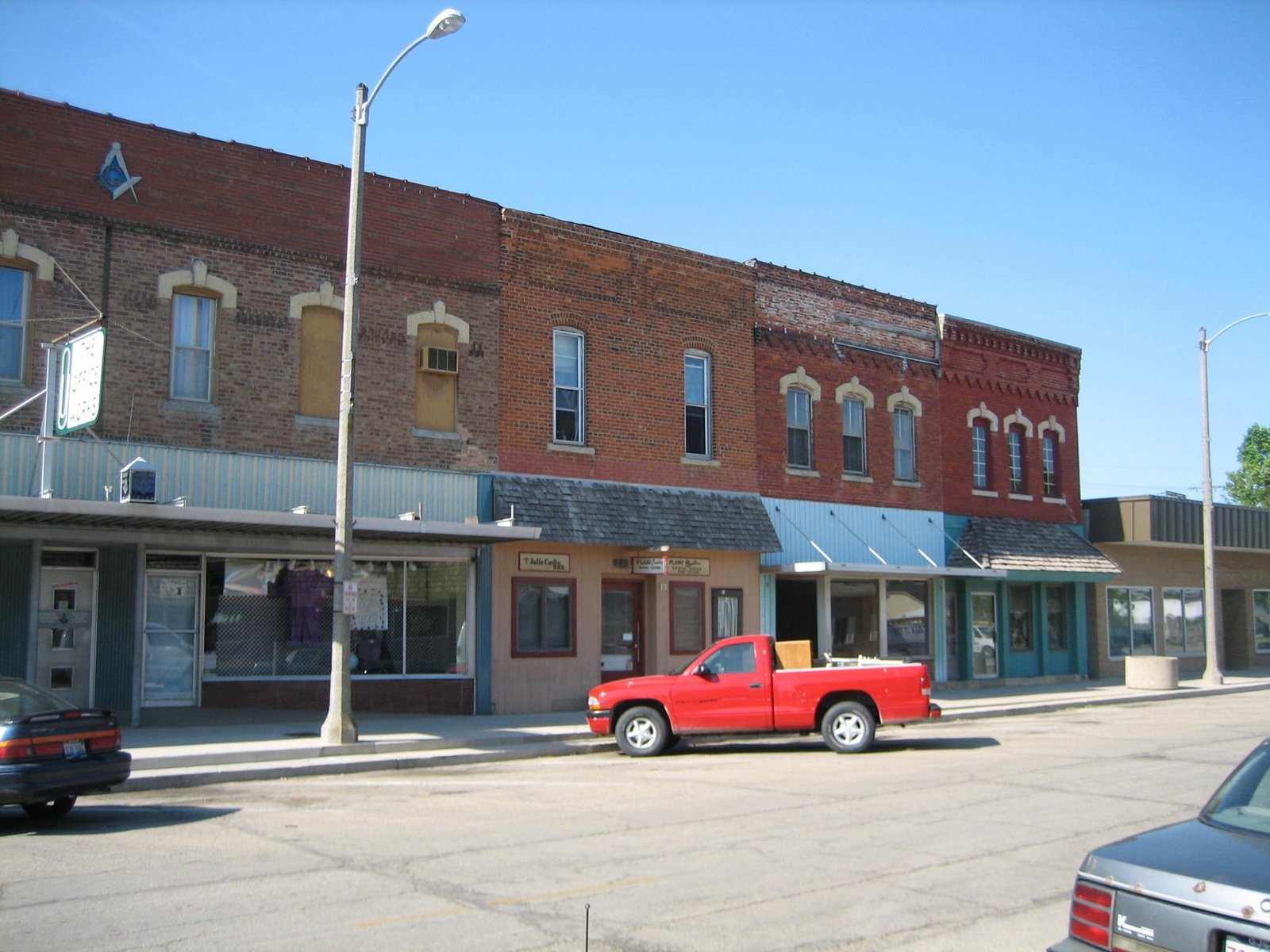
The town of Plano becomes one of the principal real-world foundations for Smallville.
That choice matters.
Before the enormous battles, Kryptonian spacecraft and towers of Metropolis, Man of Steel first needs to build the place where Clark Kent grew up.
Smallville is his human world.
Farms.
Roads.
Local businesses.
A school.
The Kent home.
A recognizable American community.
All of it helps ground Clark in something ordinary before his extraterrestrial origins disrupt that normality.
The production is not simply creating a background.
It is giving Superman a believable childhood home.
A real town becomes Smallville
Using a real community rather than constructing every street from scratch gives Snyder and his team a texture that is difficult to reproduce entirely on a soundstage.
The streets already exist.
The buildings have their own history.
The distances between locations are real.
New production elements can therefore be added to an environment that already feels lived in.
But there is another challenge.
Smallville must eventually support some of the movie’s largest action sequences.
The same location has to work both as:
the intimate landscape of Clark’s childhood
and
the setting for a battle between extraordinarily powerful beings.
That contrast already captures something fundamental about Man of Steel.
The everyday and the enormous have to exist inside the same world.
Chicago provides the real-world foundation for Metropolis
The other major terrestrial environment is, of course, Metropolis.
Chicago becomes an important real-world foundation for the city, with filming moving into downtown Chicago in September 2011.
Again, the use of an existing city matters.
Metropolis is not presented as a completely fantastical place detached from our own reality.
It needs to feel like a major contemporary city.
Glass towers.
Office buildings.
Busy streets.
Public transport.
Ordinary people going to work.
Visual-effects teams would later expand and reshape this material, combining real architecture with extensive digital environments.
So it is more accurate to think of Chicago as a physical base for Metropolis, rather than the entire fictional city.
That distinction is important because Man of Steel constantly mixes the real and the constructed.
Smallville and Metropolis represent two different parts of Clark’s life
The two locations also work symbolically.
Smallville represents childhood, the Kent family, secrecy and Clark’s gradual discovery of his abilities.
Metropolis represents adulthood, society, public scrutiny and the possibility that Clark may finally have to reveal himself.
That interpretation comes from the way the finished film uses the locations rather than from a single production quote.
But the contrast is difficult to miss.
The movie has to move from Kansas fields to a vertical modern city without feeling as though the two belong to different films.
That requires a shared visual language.
Before Superman, the filmmakers have to build Krypton
The most ambitious environment, however, is somewhere else entirely.
Man of Steel does not merely refer to Krypton.
It wants to show it.
And not as a generic science-fiction planet.
Production designer Alex McDowell and his team have to develop an entire civilization:
its buildings;
technology;
clothing;
vehicles;
weapons;
creatures;
social structures;
and the visual history of a society that is both technologically advanced and extremely old.
The goal is not a world dominated by clean screens, chrome and familiar futuristic surfaces.
Krypton has to feel as though it has existed for generations.
Krypton is designed to feel ancient and futuristic at the same time
This becomes one of the most distinctive creative choices in the movie.
Kryptonian technology often looks organic.
Its architecture and surfaces suggest biological structures, layered traditions and centuries of development.
This is a technologically extraordinary civilization, but it also feels trapped by its own history.
That gives Krypton a particular identity.
The audience should immediately understand that this society is vastly older and more advanced than our own.
But it is also dying.
That tension between technological achievement and civilizational decline gives Krypton much more character than a conventional futuristic backdrop.
Even Kryptonian interfaces need their own visual language
The same approach extends to the way Kryptonians display information.
Rather than simply filling their world with conventional digital screens, the production develops more physical forms of imagery.
One of the most distinctive techniques becomes known as Liquid Geo.
Weta Digital creates systems in which tiny metallic particles appear to rise, shift and form three-dimensional images.
The result feels tactile rather than purely digital.
This matters because the technology is not merely decoration.
It suggests that Kryptonians have not simply invented more advanced versions of our computers.
They have developed a fundamentally different visual language for technology.
Superman’s costume also has to be rebuilt
Few design decisions are more sensitive than Superman’s costume.
The character possesses one of the most recognizable silhouettes in popular culture.
Changing it carries an obvious risk.
Costume designers James Acheson and Michael Wilkinson contribute to the film’s overall costume language, with Wilkinson working closely with Snyder on the development of Superman’s final look and its connection to Kryptonian culture.
The costume is therefore treated less like something Clark independently creates on Earth and more like part of his inheritance.
That makes it more than a superhero uniform.
It belongs to the world of Krypton.
Familiar enough to be Superman, different enough to belong to this world
The essential visual language remains intact.
Blue.
Red.
Cape.
The emblem on the chest.
The silhouette still has to read immediately as Superman.
But the details change.
The material becomes heavily textured.
The boots and body suit appear to belong to the same broader Kryptonian design system.
Most visibly, the traditional red trunks disappear.
The change may seem superficial.
But it reflects the broader philosophy behind the production.
Snyder and his collaborators are not trying to erase Superman’s iconography.
They are trying to make that iconography feel as though it has an internal reason to exist within the film’s world.
The “S” becomes part of Kryptonian heritage
The emblem receives the same treatment.
Within the story, it is not simply presented as the first letter of the word “Superman.”
It belongs to the House of El and becomes associated with the idea of hope.
That allows one of the most famous visual symbols in superhero history to exist before humanity has even given Clark a superhero name.
Clark does not first decide to call himself Superman and then draw an “S” on his chest.
Instead, he carries a Kryptonian symbol that humans will later interpret through their own language.
It is a small change with major consequences for this version of the character.
Henry Cavill has to become Superman before wearing the suit
The transformation cannot rely on costume design alone.
Henry Cavill has to change physically as well.
He trains extensively with Mark Twight, whose work becomes a major part of Cavill’s preparation for the role.
The goal is not simply to make the actor look larger.
Snyder wants Superman’s strength to feel physically credible.
Cavill therefore spends months developing muscle, strength and endurance, with the training continuing through a long production.
The costume is not meant to manufacture Superman’s body.
It is designed to reveal a physique Cavill has genuinely built for the role.

Cavill’s Superman must look powerful without ceasing to be Clark
That creates another challenge.
Physical power alone is not enough.
The audience has to believe that this man possesses extraordinary strength while also accepting that he has spent most of his life as Clark Kent.
The movie therefore needs two sides of the same performer.
On one side:
the physical presence of someone capable of confronting other Kryptonians.
On the other:
a quiet, uncertain man still trying to understand what he should do with his abilities.
The character is not simply designed to be the most powerful Superman possible.
He is designed as someone who has not fully become Superman yet.
The camera has to support that idea
Cinematographer Amir Mokri photographs the movie in 35 mm anamorphic.
At the same time, Snyder and his team pursue a more mobile visual language than audiences might expect from such a large-scale superhero production.
The camera often moves with the characters.
It reframes.
It adjusts.
At times it seems almost to search for the action.
Visual-effects supervisor John “DJ” DesJardin would describe the intention as naturalistic, handheld and sometimes close to documentary filmmaking.
The result is an unusual combination:
large-scale mythological imagery photographed as though a camera operator might actually be standing there trying to capture it.
What would it look like if a real camera tried to follow Superman?
That idea becomes especially important once Clark begins using his powers.
How do you photograph someone who can move at impossible speed?
One solution would be to make every superhuman movement perfectly composed.
Man of Steel often chooses something different.
The camera may appear slightly late.
It may suddenly correct its framing.
It may zoom to find a character who has moved faster than expected.
The effect is deliberately constructed.
But it creates an important illusion:
a human camera operator seems to be trying to follow something that should be physically impossible to film.
The fantastic event feels as though it is happening inside our world.
Superman’s powers need weight
The same philosophy shapes the action sequences.
The powers are not supposed to look impressive only in isolation.
They need to affect the environment around them.
When a Kryptonian accelerates, the ground, air or surrounding objects may respond.
When extraordinarily powerful characters collide, buildings and landscapes become part of the physical event.
Speed and strength therefore acquire visible consequences.
This is one of the ways Man of Steel differentiates itself from many previous versions of Superman.
Modern visual effects finally allow the filmmakers to ask:
what might an actual confrontation between beings with Superman-level abilities look like?
Visual effects extend what was captured on set
A large part of this world obviously cannot exist entirely in front of the camera.
Krypton.
Spacecraft.
Flight.
Superhuman combat.
Large-scale destruction.
Kryptonian abilities.
All of it requires extensive visual-effects work.
Companies including MPC, Double Negative, Weta Digital and Scanline contribute to the film.
But the overall approach is often to connect digital imagery to real production elements whenever possible:
actors;
costumes;
sets;
lighting;
photographed locations.
Digital doubles, reconstructed environments and effects can then extend what already exists rather than feeling like a completely separate world.
It is not enough simply to make Superman fly
Flight is perhaps the clearest example.
Superman has always been able to fly.
But Snyder wants the experience to feel physical.
Clark’s early attempts are therefore treated as a learning process.
He has to discover how much force is required.
Lose control.
Fall.
Try again.
Gradually understand what his body can do.
The power becomes part of his personal development.
Even when he is doing something impossible, the sequence tries to preserve a sense of effort and discovery.
Lois Lane is also being rebuilt
Amy Adams receives a significant reinterpretation of Lois Lane.
She is not simply waiting in Metropolis for Superman to appear.
Her journalism leads her toward Clark.
She investigates.
Collects information.
Follows witnesses.
Attempts to understand the mysterious man who seems to appear in extraordinary situations and then disappear.
This allows the film to treat Clark as a mystery someone could realistically investigate.
Lois becomes an active engine in the discovery of Superman rather than merely someone reacting to his public arrival.

The world has to react before it understands what Superman is
This may be one of the most important differences in the film’s approach.
Superman does not immediately appear in a society already comfortable with costumed heroes.
His existence raises questions first.
Who is he?
Where did he come from?
Is he dangerous?
Can he be trusted?
What would governments do if they discovered him?
How would ordinary people respond?
Those questions influence the visual and narrative construction of the film.
Superman has to feel new to the people inside the story, not only familiar to the audience watching him.
Part of the future Snyderverse language is being created here
No one filming Man of Steel in 2011 can know every detail of what will eventually follow.
But several choices made during this production will survive beyond the first movie.
Superpowers presented with physical weight.
A contemporary world reacting politically and socially to extraordinary beings.
Costumes treated as objects with their own cultural history.
Real cities transformed into mythological spaces.
A camera that sometimes observes impossible events through an almost documentary language.
A recurring interest in the way ordinary humans respond to beings far beyond them.
These elements will become especially important once Batman enters the story.
To place Man of Steel within the broader Snyderverse viewing path, see also: What Order Should You Watch the Snyderverse Movies? A Spoiler-Free Guide.
Man of Steel is building more than Superman
That is what makes this production so important to the larger history.
The movie begins with one central problem:
how do you reinvent Superman for contemporary cinema?
But answering that question forces Snyder and his team to establish a set of rules.
How does Kryptonian technology work?
What does Kryptonian power look like?
How does a modern city react to these events?
How do you film someone who can fly?
How might a government respond to the existence of an extraterrestrial?
What place can someone like Superman occupy in a contemporary society?
Those questions will soon extend beyond a single film.
Filming ends, but Superman is not finished yet
Once principal photography is complete, most of the physical material has been captured.
But Man of Steel is still far from finished.
Visual effects have to be completed.
Scenes have to be assembled.
Music has to find its place.
Sound design has to give weight to spacecraft, combat and superhuman abilities.
Color grading has to bring real and digital environments together into a coherent visual world.
The movie moves from production into an extensive period of post-production.
Only after that process will Warner’s new Superman finally be ready for audiences.
June 2013: the new Superman arrives
Man of Steel opens in the United States on June 14, 2013.
Almost two years after production began, Henry Cavill officially becomes cinema’s new Superman.
Zack Snyder and his collaborators have created a new Krypton, a new Smallville and a new Metropolis around him.
But something even more significant happens soon afterward.
The world built for Superman does not remain confined to one film.
Only weeks after the release of Man of Steel, Warner and Snyder reveal that the next chapter will not simply be another solo adventure for Clark Kent.
Batman is coming into this universe.
And that is where the next chapter begins:
Next article: After Man of Steel: How Batman Entered Zack Snyder’s DC Universe.